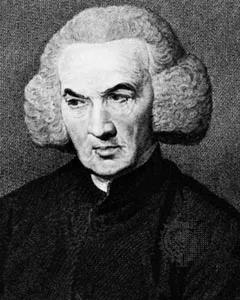
Richard Price (1723-1791) was a prominent Welsh moral philosopher, mathematician and preacher. He was an influential intellectual figure during the Enlightenment and played significant roles in both religious and political discourse of his time as an extremely prolific writer, expressing Lockean ideas about government and ultimately influencing the founding fathers of the United States. He defended the concept of natural rights and human moral autonomy, and emphasized greatly the importance of human liberty. He defended the American and French revolutions through his philosophy of individual liberty. In particular, Price shows the virtue of prudence to be the highest exercise of one’s rational mind and liberties. This philosophy shows that man must understand virtue and strive towards it in ways that are both self-interested and religiously devoted, because it is the easiest and the surest method of acquiring happiness both in the current life and the afterlife. This philosophy requires that governments protect these liberties of man so that man may exercise his own prudence with impunity. Price weaves these ideas throughout his texts, and makes clear how prudence and free will are inextricably linked. His religious beliefs are critical in understanding the nature of his prudence. For him, prudence is the exercise of moral liberty, and he believes it is the man’s natural obligation to pursue happiness through acting virtuously and being mindful about their future.
In Price’s eyes, behaving virtuously is exercising rationality to determine what is right and wrong. No matter what it is, “in all actions we are led to form some opinion, as either fit to be performed or unfit.” (Morals, 8). We cannot help but determine in our minds the ideas of rightness and wrongness, fit and unfit. He argues that humans have a unique ability, a “power within us” which determines right and wrong, which he calls “the understanding.” (Morals, 6). This is an understanding derived from our experience and from our constant interactions with the world which lead us to determine that there are reasons for every action, interaction and reaction we see in the world. Changes, for example, cannot be derived from nothing. In debt to Newton, objects cannot change their motion for no reason. To Price, this is simply common sense (Morals, 11). This understanding that we develop allows us to take control of our own lives — by watching the ways in which objects and people interact with each other, a developing person is able to see that they themselves can change the things in their lives. Even more simply put, we have to decide to put ourselves in motion, thus our understanding provides us the power to change the quality of our lives. Here, our inward consciousness gives us the idea of the “particular sort of power implied in activity and self-determination.” (Morals, 11). As such, it is the natural inclination of a normal, healthy human being to reach this level of understanding and act to change his surroundings, behaving and changing things according to his reasoned beliefs of what is right and what is wrong. This ability to determine right from wrong expands into what it means to be “prudent.” For Price, prudence is a quality of the “upright man,” someone who metaphorically stands tall and is drawn precisely to act virtuously. To be prudent is to be mindful of the separation between present pleasures and future desires. Men in many particular situations will have desires that conflict, usually, Price says, between their own happiness and the happiness of others. Prudence, for Price, is the ability to determine which action is best not only through what might happen immediately, but what the actions could lead to. Most importantly, he says that men should be naturally drawn to acting in the most prudent and virtuous manner, because it is the easiest. “If we regard only our temporal interest, an upright course is the safest course. In order to be sensible of this, you should think of the troubles which men very often bring upon themselves by deviating from integrity. It is very difficult to go on for any time in dishonesty and falsehood, without falling into perplexity and distress.” (Sermons, 5). To be prudent in this case is to realize that decisions that ask you to sacrifice your integrity or honesty will only compound your troubles further. If you are able to think through your decisions carefully and intelligently, that is the mark of a prudent man. There is wisdom in this kind of behavior, and “the ways of wisdom are ways of pleasantness, and happy is every one that retaineth her.” (Sermons, 19). This “upright man” is critical to understanding what Price refers to in prudence. The upright man is the honest man of integrity, and is somebody who, first and foremost, uses his cognitive faculties to consider how to act. For Price, “Where virtue is greatest there will be the most ardent and active benevolence, and likewise the greatest degree of true prudence, the highest concern about bettering ourselves to the utmost, and the most effective and constant pursuit of private happiness and perfection, in opposition to whatever hindrances and temptations to neglect them may be thrown in our way.” (Morals, 93). This particular quote is a lot to unpack, but it reveals the entirety of what Price believes to be our highest moral good. Man is prudent by bettering himself for the sake of private happiness and perfection—or moral improvement. He takes pleasure in trying to be more perfect, and to enact benevolence upon others, and he does not succumb to the temptation of his passions.
Price cares particularly about prudence because this quality allows man to think and act to benefit his future, and as a preacher, Price is particularly concerned about man’s life after his life on Earth. As a mathematician who made significant contributions to the field of probability theory, Price continually uses language about what is most likely to lead someone to a successful life, in this case, a life well-lived on Earth that leads to eternal happiness in God’s home. What is critical to understand here is that Price is aware that humans are not perfect, and will not do the most virtuous thing every single time. It is, for an upright man, a “constant pursuit” of perfection that guides him, and this perfection is none other than God Himself. “To be capable of deducing—demonstrably, accurately and in particular detail—the whole rule of right as it applies in every case, we must have universal and unerring knowledge,” (Morals, 81). which is impossible to obtain for a mortal man. Essentially, only God can know the truly correct way to act in every particular instance. Men can only try and pursue it further — To act righteously is to act like God. It is to promote the order of his creation.” (Sermons, 10). If we are to consider one’s choices in ways to act as a cost-benefit analysis, Price sees acting righteously, only like God, as the most prudent option, because this behavior not only makes our present life better but also secures our future with God. To Price, “Our happiness hereafter” depending on our conduct in the Earthly life is “certain” because our happiness in every stage of our life depends on the one preceding it. For Price, then, it is “very credible that a virtuous conduct” (Sermons, 9) could have an effect on a man’s afterlife. As to what the effect is, Price believes that it is intuitive that the righteous would fare better than the wicked in said afterlife. Thus, when thinking about one’s spiritual future, practicing prudence means preparing for that very future by acting virtuously (practicing moral reasoning) according to God’s will. Still, Price knows that not everybody is convinced only by the suggestion of eternal happiness beyond death, and he knows that not everybody believes in the same particular beliefs about God. Nevertheless, even if one does not believe in an afterlife, they are still going to be most successful if they behave as an upright man, both in their livelihoods and their general happiness. Speaking in probabilities once again, he says that “upright conduct is commonly the most sure way to obtain success in our worldly concerns.” (Sermons, 6). The upright man builds a reputation for himself as someone who is honest. Nobody can have anything reasonable to hold against him, simply because he acts only in ways that represent integrity. His gains, Price says, may not be as fast or as quick as a dishonest person, but it is the most sure path. In addition to almost guaranteeing your success, behaving uprightly also relieves your conscience, making you happier. A man who behaves dishonestly for short-term success not only loses his reputation with others, he also loses reputation with himself. As Price has said before, each person is naturally inclined to an understanding through experience of what is right and wrong. Thus when we act wrongly, we know it, and we cannot forget. A virtuous, upright man has a special blessing of “peace of conscience,” which Price believes to provide a great deal of “peculiar happiness,” which is “more permanent than any other happiness. The pleasures of the vicious are transient; but virtue is a spring of constant pleasure and satisfaction.” (Sermons, 31). This is unique — pleasures obtained through wine and company, leisure or otherwise are, to Price, merely fleeting. But the happiness obtained from virtue is “pure,” because it is “seated in the mind.” (Sermons, 35). It has been obtained via reason, refining it and showing that happiness obtained from virtuous behavior is an exercise of man’s rational faculties. In this manner, the present comfort obtained by virtue is another reason one should act prudently, even if they’re not thinking about the afterlife. “If the doctrines of religion be true, you will be completely happy through the Saviour of mankind. But should they not prove true, you will not be worse off than others.” (Sermons, 17). Price has shown the importance of behaving uprightly, and on the fronts of living a successful life here and after, shows that it is prudent to do so. “If, therefore, we love prudence, we shall not, in our temporal concerns, ever swerve from uprightness.” (Sermons, 13).
Given this understanding of the ways prudence and uprightness are linked, the quality of being prudent makes a nexus with the ability to be free, to exercise one’s own liberty. This is liberty primarily from yourself. Price believes that behaving prudently through virtue is an exercise of free will, because it is against our instincts. “It is very common for men to impose upon themselves; to wink at offensive truths; and to practise unfair arts with their own minds,” (Sermons, 3) but this is inconsistent with uprightness and therefore inconsistent with prudence. It is easy for someone who is impatient to take the shortcuts by sacrificing their integrity, but Price sees people who behave this way as people who don’t truly understand what they’re sacrificing. Price wants to show that there is value in self-discipline and going against one’s animalistic instincts (passions). “Future considerations are more indicative of prudence; we are drawn towards the present with a greater amount of instinctive desire.” (Morals, 93). For Price, being prudent on the front of the future is more valuable, because it is not as impressive to care about the things that are close to the present. The fact that they are so close makes it our first instinct to worry and concern ourselves with them, but true virtue and prudence is found when man rejects that initial instinct and consults his rational faculties in order to come to a well-reasoned decision about how to act. If one only follows their instinct instead of their rational mind, Price says that they are not free. They have no liberty, because they are enslaved to their passions. “The most vicious man is the one who is most enslaved by evil habits, or in whom appetite has gained the upper hand, and the respect for virtue and duty is weakened to such an extent that we can always foretell with certainty that he will do evil when tempted to it.” (Morals, 101). To Price, somebody who is enslaved to these habits has no ability to conceive of what it means to be virtuous. Price sees liberty as existing on four fronts: physical, which allows one to direct and own their actions; moral, which allows one to follow their sense of right and wrong; religious, the freedom to follow whatever deity one pleases; and civil, the ability to have a role in the state that governs their liberties. It is important to clarify that if one person is invariably drawn to virtue while another is drawn only to vice, it is only the one who is drawn to vice that has had his liberty restricted, because “every man’s will, if perfectly free from restraint, would carry him invariably to rectitude and virtue ; and that no one who acts wickedly acts as he likes, but is conscious of a tyranny within him overpowering his judgment.” (Observations Tract Two, 11). When we are truly free, there is nothing we would want to do besides the virtuous, but the truth is that we are far from perfection. There is a temptation in the particulars of our life, temptation in luxury, money and titles. Those always eat away at us and try to convince us to do something which is different from that pure, refined happiness obtained from virtue. Price is particularly passionate about this front — he says “Go then, all ye careless and irreligious men. Take to yourselves your money, your honours, and polluted pleasures. I would desire VIRTUE only. There is nothing else worth an eager wish.” (Sermons, 39). To him, people who desire anything other than virtue are “careless,” both about themselves and about God. They are governed by their desires. In contrast, a prudent man is “governed by no sinister ends, or indirect views, in the discharge of his duty. It is not the love of fame, or the desire of private advantages, or mere natural temper, that produces his virtuous conduct; but an affection to virtue as virtue ; a sense of the weight and excellence of the obligations of righteousness ; and a zeal for the honour of God and the happiness of Mankind.” (Sermons, 2). He cares for himself, mankind and for God. This is Price’s prudence.
Price, however, does not simply see prudence as a quality limited to individual men. His treatises on civil liberty show that he is very concerned with prudent behavior from the lens of governments. He reflects on the decision-making of the British government with respect to the American revolution, believing that the British government is acting foolish and thus imprudently on almost every front imaginable. First, with respect to the national debt, Price has written nearly 150 pages explaining why Britain cannot afford this war. Strictness over debt is extremely important for Price, but what is important to note is that in many different calculations, Britain is in no economic position to be fighting this battle and may not even be able to sustain itself if there were no war. Britain, according to Price, has behaved imprudently. He considers it an injury that Britain has done to itself by regulating and treating Americans so harshly — “Had we nourished and favoured America, with a view to commerce, inſtead of considering it as a country to be governed,” (Observations Tract One, 69) he says, every success of America would be shared, and both sides would benefit greatly. Yet now the Americans have been pushed to a war Britain cannot afford, and Price believes that the prudent move is to retreat. He applies his prudence by looking at the options and weighing the potential future consequences. He considers the possible futures if Britain continues fighting: either they win or they lose. Even if they win, which Price believes is highly unlikely, America is destroyed economically, and Britain cannot regain any monetary value by taxing them higher. In addition, because they would have taken the colonies back by force, they would have to constantly maintain it with force, which would only be more detrimental to Britain’s already massive public debt. If they lose, Price says, he “need not go further,” because that future is so much more horrid. Thus, “PRUDENCE, no less than true HONOUR, requires us to retract.” (Observations Tract One, 88). In this idea of government prudence, Price is incredibly concerned about the national debt, offering up multiple different solutions with lotteries and altered percentages in order to calculate the best possible future for Britain, all of which look bleak. But he stresses the importance of the representatives of Parliament to look over the debt with a “strict eye,” the government must consider its own interest and the entire nation’s happiness. Price says that even forgetting about the moral wrongs they have done to America by restricting its residents’ civil liberties, that “our feelings for ourselves soon may” (Observations Tract Two,77) make us tremble. At the time Price wrote this tract, he believed it was already too late. Still, with the power of hindsight, he suggests what the prudent action for Britain may have been, if it had acted in a future-conscious perspective. “Some time ago this horrid danger might have been avoided, and the colonies kept by the easiest means. By a prudent lenity and moderation. By receiving their petitions. By giving up the right we claim to dispose of their property, and to alter their government.” (Observations Tract Two, 75). What Price shows here is a twofold importance of prudence. Both that it is important that a nation’s citizens maintain their liberties so that they may be prudent in the first place, and that this continuation of civil liberty by a government is an act of prudence in itself. It is thus prudent to allow men to be prudent. He expands this principle to how men should govern in general — to be respectful of everyone’s civil liberties and their pursuit of happiness, i.e. their ability to be prudent. By doing so, the government itself is able to secure the best happiness for its people. Price shows that he sees the nature of government as primarily for the people, not on them, and sees government itself as “an expedient contrived by human prudence for gaining security against oppression; and that, consequently, the power of civil governors is a delegation or trust from the people” (Observations Tract One, ii) to accomplish this end. Thus government cannot be an imposition — instead it is an act of prudence by a collective precisely to prevent any such impositions, and when a government is not pursuant to that duty, such as in the case of Britain and its American colonies, the act of prudence by the colonists must be to reject the impositional government and establish a new one. Price clearly regrets this as an error by the British government, but knows that the prudent move for it now is to retreat so it may “always preserve her diftinguiſhed happineſs, and eſcape the danger which now threatens her. And may the time foon come, when all mankind, sensible of the value of the blessings of peace and equal liberty, ſhall suffer one another to enjoy them, and learn war no more.” (Observations Tract Two, 156).
Prudence, then, is the exercise of man’s will in determining right from wrong, and Price believes it is the ultimate duty of men to incline themselves towards their own happiness by acting virtuously and being mindful about their future. That this is a quality inherent to his perspective on freedom, particularly in the expression of moral and civil liberty. Civil governments, too, are acts of prudence — they are a collective act by humans to better secure their future selves against any potential tyranny, and this security is necessary because it is incredibly important that man actually be able to decide things for himself. Price takes an incredibly religious view on this matter, because being able to rationally determine what is moral both makes us happy in the act itself and allows us to more closely pursue God; acting morally secures both our immediate present and divine future.